
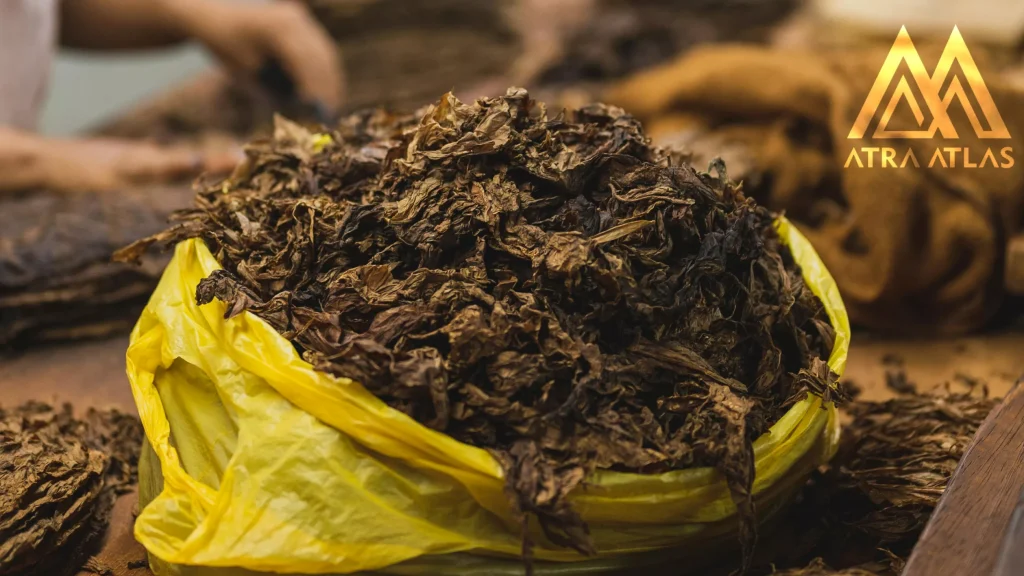
After the arrival of Europeans in America, the popularity of tobacco as a commercial commodity increased. This plant boosted the economy of the southern United States until cotton replaced it. After the American Civil War, changes in tobacco demand and labor led James Bonsack to invent a machine that automated cigarette production. This increase in production caused the rapid growth of the tobacco industry until the scientific discoveries of the mid-20th century.
Conditions for growing and cultivating tobacco
The tobacco we use in cigarettes and enjoy smoking every day must be grown in specific conditions to be high-quality. The best climate for sprouting and cultivating the tobacco plant exists in relatively warm areas with temperatures between 20 to 30 degrees and where the temperature does not exceed 35 degrees during the growing period. This plant should be cultivated in places where it can tolerate a temperature difference of over 10 degrees from planting to harvesting.
Irrigation and quality of tobacco
Proper irrigation also has a significant impact on the final quality of tobacco. Irrigation should be done at regular intervals to ensure that the plant receives enough water, but not in excess. The plant should not be flooded; although excessive irrigation speeds up the plant’s growth, it reduces the nicotine content, making the final tobacco unsuitable for cigarette use.
Soil and color of tobacco leaves
توتون can grow in almost all types of soil, and if well maintained, high-quality tobacco can be produced. The final color of the tobacco leaves depends on the color of the soil in which the plant is grown. Lighter soil results in lighter leaves. However, the dark color of industrial cigarette tobacco is also due to another reason besides the type of soil it grows in: chemical additives.
 English
  Persian
  Portuguese